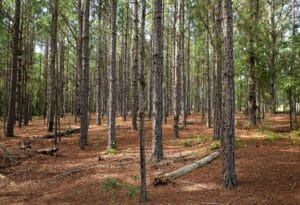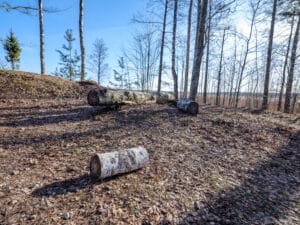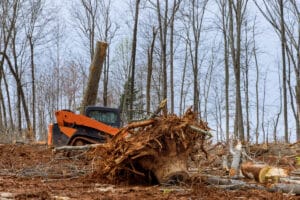

Thick hardwood forests dominate much of the state, with oak, hickory, maple, and locust covering large areas and limiting easy access for equipment. Heavy clay soil puts extra strain on equipment and increases wear, while rolling hills, steep hollers, and uneven ground restrict machine access and reduce overall efficiency. Frequent rain adds another challenge by turning job sites muddy, cutting into workable windows, and increasing downtime that raises labor costs.
Because of these challenges, many homeowners begin looking for alternatives to traditional land clearing, like forestry mulching. But how much does forestry mulching cost per acre in Kentucky? And does it actually offer savings compared to pushing, hauling, and burning debris?
In this blog post, you’ll learn how forestry mulching works, what affects costs per acre on Kentucky properties, and how to reduce expenses before scheduling service.
What Is Forestry Mulching?
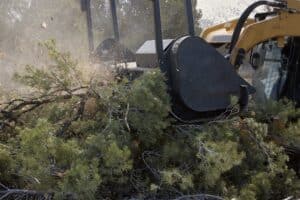
Forestry mulching refers to a land clearing process that removes trees, brush, and vegetation using a single machine equipped with a high-powered mulching head. The machine cuts, grinds, and shreds material into mulch, which remains spread evenly across the soil surface. Unlike traditional clearing methods, forestry mulching does not require hauling debris away or burning it on site.
Many property owners choose forestry mulching over conventional clearing methods for the following reasons:
- Lower overall project cost: The process eliminates debris hauling, disposal fees, and multiple equipment crews, which keeps the cost per acre for land mulching more predictable.
- Reduced site damage: Mulching preserves topsoil and minimizes ground disturbance, especially on sloped or erosion-prone Kentucky terrain.
- Faster completion times: One machine performs the entire clearing process, which shortens timelines compared to multi-step approaches.
- Improved vegetation control: Mulch suppresses weed growth and limits regrowth while returning organic matter to the soil.
- Cleaner finished results: Land remains level and usable without piles of stumps, roots, or debris.
If you want land cleared without dozing, hauling, or leaving deep ruts behind, consider forestry mulching as a more affordable and efficient option.
Factors Affecting Forestry Mulching Costs in Kentucky
Kentucky has some of the most beautiful scenery in the United States, but it comes with some of the most stubborn to clear. The Next sections describe common characteristics of Kentucky properties that affect forestry mulching costs. If you have questions about specific features on your property, call Sanctuary Forestry Mulching at (859) 800-2979 or visit our website to request a free quote.
Vegetation Density and Tree Diameter
Thick brush, invasive species, and mature hardwood trees require more cutting power and slower processing speeds. Larger diameter trees increase wear on mulching heads and raise brush and vegetation mulching rates. Heavily wooded acreage takes longer to clear than light undergrowth or pasture edges.
Terrain, Slope, and Ground Conditions
Flat land clears faster than steep hillsides, ravines, and uneven terrain. Sloped ground forces operators to move carefully and limits cutting angles. Rocky areas and hidden stumps also slow progress and increase equipment strain, which affects overall pricing.
Soil Type and Moisture Levels
Much of Kentucky has clay-heavy soil, which causes traction loss and increases equipment strain. Wet ground from rain or poor drainage further slows operations. Saturated soil conditions may require delays, extending project duration and influencing final costs.
Property Access and Layout
Narrow entrances, fencing, and limited staging areas increase setup time. Irregular lot shapes, segmented acreage, and obstacles like buildings or utility easements require extra maneuvering. Poor access directly impacts Kentucky forestry mulching pricing.
How To Reduce Forestry Mulching Costs Before Scheduling Service
Forestry mulching isn’t a DIY job, but you can take steps to lower the cost before you schedule a professional crew.
- Remove debris such as scrap metal, wire, tires, or trash that could damage equipment.
- Clearly mark property boundaries, utility lines, septic systems, and protected areas.
- Create wide, stable access points for machines to enter and exit the property.
- Cut tall grass along access routes to improve visibility and reduce prep time.
- Combine multiple clearing areas into a single project instead of scheduling separate visits.
Preparation allows crews to focus on productive clearing instead of site corrections.
Call Sanctuary Forestry Mulching To Schedule Affordable Forestry Mulching in Kentucky
Forestry mulching offers a reliable alternative to traditional land clearing by reducing labor, minimizing site damage, and delivering consistent results. However, as this blog post explains, the cost per acre varies based on vegetation, terrain, soil conditions, access, and other factors affecting forestry mulching costs.
At Sanctuary Forestry Mulching, we specialize in professional land clearing services in Kentucky. Our team understands local soil composition, native tree species, and terrain challenges that influence pricing and performance. We use commercial-grade equipment to deliver accurate estimates and dependable results for property owners throughout the state.
If you want clear answers about brush and vegetation mulching rates, call Sanctuary Forestry Mulching at (859) 800-2979 or visit our website to request a free quote for forestry mulching services in Kentucky.